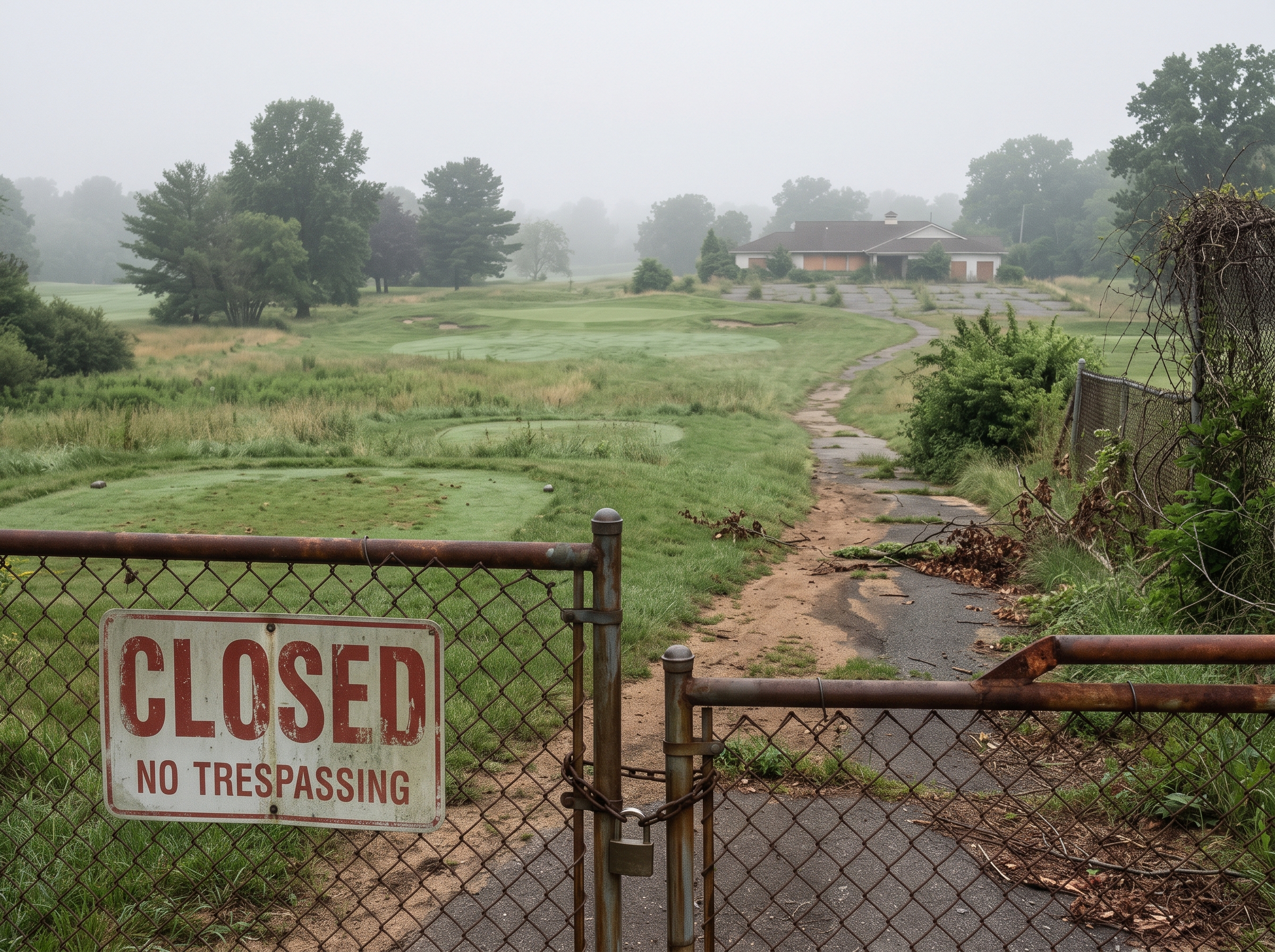
I have both been a member of a private golf club, and I have done consulting for a different club during a crisis situation. So I can say with certainty that you do not want to mis-communicate with dues-paying golfers. Unfortunately for them, the board at The Boulders Club in Carefree Arizona are learning that lesson the hard way.
On Sept. 4, 2026, a federal judge in Arizona ruled that CP Boulders LLC, owner of The Boulders Club, breached its member contract and the implied covenant of good faith when it stopped rotating members between its two golf courses -- a change it announced by email two days after members voted down the owner's own proposal.
That's the whole story, really. Everything after it is what happens when an owner treats a lost vote as an insult instead of information.
What happened
The Boulders has two 18-hole courses, the North and the South. Under the club's 2008 bylaws, which CP Boulders inherited when it bought the club in 2015, "[e]ach day, The Boulders staff will designate one of the Golf Courses for the exclusive use of the Members." For decades that meant members played one course one day and the other the next. The club's head golf professional, at The Boulders since 2000, testified it had "rotated on a daily basis" for decades. The club's website advertised "[u]se of both The Boulders' championship golf courses" through at least 2019. As late as October 2022, the club's general manager wrote to the members' advisory committee that membership included "[a]ccess to two golf courses on alternating basis."
Then the owner asked members for something. According to the member's complaint, CP Boulders proposed in August 2022 to raise the cap on golf memberships from 400 to 440, which required a majority vote of golf members. On Jan. 29, 2023, the members voted no.
On Jan. 31, 2023 -- two days later -- the general manager emailed members that, effective the next morning, the South Course would "be reserved for resort and retail guests," and members would "have the North Course dedicated for play seven days weekly as a member only course." According to the court's order, a former director of club operations testified that when the announcement went out, he knew "members were going to be upset because we had alternated courses in the past."
A Premier Golf member since 2011 sued in Maricopa County Superior Court in October 2023, and the case moved to federal court that November. It has been fought motion by motion ever since. In July 2025 the same judge found CP Boulders had also breached the bylaws by failing to commission and deliver required agronomic reports on the courses in 2017, 2018, 2020, 2021 and 2022.
The Sept. 4 order settles the course question. The bylaws, Senior U.S. District Judge Stephen M. McNamee wrote, "do not give Defendant the unfettered right to designate which course members can play." The owner "did not obtain the required Member vote." And it violated the covenant of good faith by "exercising express discretion in a way inconsistent with [Plaintiff's] reasonable expectations" when it "unilaterally took Plaintiff's right to play both the North and South Courses on an alternating basis." The court declared that the bylaws require the member course to alternate "on a daily (or near daily) basis."
What they said
The owner said plenty in 2023, and none of it helped. After the Jan. 31 email, according to the order, the club followed up with this: "Nothing will change with the use of the south course. No trading courses, the way it is now is the way it will always be."
Read that sentence the way a member reads it. It doesn't explain. It doesn't offer anything. It closes a door two days after the members exercised the one real lever their contract gives them. Whatever the owner intended -- and the court made no finding on motive -- the timing wrote the headline for them. When the response to losing a vote arrives 48 hours later and takes something away, nobody reads it as course management. They read it as punishment.
In court, CP Boulders argued the bylaws gave it the right to decide which course members could play. The judge rejected that. I could find no public statement from CP Boulders on the ruling. The latest public word from management I found was an October 2025 release on renovated North Course greens, which "further illustrates our commitment to offering the very best golf course experience for our guests and members" -- issued while members were suing for access to the other course.
What it cost
Some of this is on the record. Most of the dollar figure is my estimate, and I'll show the work.
The legal bill. This is a three-year federal contract case with more than 160 docket entries, at least seven motions for partial summary judgment from the plaintiff, and two outside firms on the defense side. My estimate, not a reported figure: 1,200 to 2,000 defense attorney hours at a blended $400 to $500 an hour comes to roughly $500,000 to $1 million in defense fees so far. Arizona law (A.R.S. § 12-341.01) also lets a court award reasonable attorney fees to the successful party in a contract dispute. No fee award has been made and damages haven't been decided. But a contract-case loser in Arizona can end up paying both sides' lawyers.
The prize. What the owner wanted in January 2023, per the complaint, was 40 more golf memberships. It went on to rewrite the bylaws in March 2023 and sell new memberships under them -- including 48 to non-residents, which CP Boulders admitted in court -- and the validity of those rewritten bylaws is still part of the fight. On the course question, though, the owner now has a federal declaration that it must restore the rotation it took away. Three years of litigation to end up exactly where it started.
The members. This is the cost an owner-operator should lose sleep over. The Boulders members now have an organized association with its own website, posting the court's rulings. According to that association, the lawsuit is funded by voluntary member contributions to a "Contract Enforcement Fund" held in trust by the plaintiff's law firm. Your customers passing the hat to sue you is not a legal problem. It's a relationship that's already over, and you're paying lawyers to find that out.
What they should have done
The first four hours after a failed vote are the cheapest four hours an owner will ever get. Here's what I'd have done with them.
Hour one: say the vote counted. A short note to every member that afternoon, signed by the owner rather than the club office: the cap increase didn't pass, we accept the result, and nothing about your membership changes because of it. Three sentences. That note is worth more than any amenity on the property.
Hour two: say why you asked. Owners propose membership increases because they need revenue, usually for capital work. If that was the reason -- and the course renovations the club later announced suggest the need was real -- say so with a number. "We need $X over three years for greens, bunkers and pump stations, and here's what we think that means for dues" is an opening offer. "The way it is now is the way it will always be" is a closed door.
Hour three: book the room. Put a meeting with the members' advisory committee on the calendar within two weeks, and bring the capital plan and the alternatives. Members who just voted no are the most engaged customers you'll ever have. Use that.
Hour four: kill the email. If ownership believed the bylaws let it restrict course access, the place to make that case was a proposal put to a member vote -- the process the court later said was required -- not a policy emailed out for the next morning.
Call it the 48-hour rule. If your response to losing a vote takes something away and lands within two days, everyone will decide it was retaliation, whatever you meant. The court never had to find motive. The calendar did that work.
Every owner-operator has a Jan. 29. The dues increase the membership rejects. The schedule change the hygienists push back on. The loss isn't the problem. What you send in the next 48 hours is.
Sometimes you own the narrative. Sometimes it owns you. The Boulders handed the narrative over with one email -- and has spent three years paying lawyers to try to get it back.
I'm Hani Durzy. I spent 25 years running communications at LinkedIn, eBay, and Realtor.com. Red Dog Strategies helps owner-led businesses control what customers, and the AI tools they now ask first, hear about them. Want to know what the machines say about your business when you're not in the room? Message me and I'll run your free Red Dog AI Visibility Score.